
What Window is Best for Me?
Are casement or double-hung windows better?
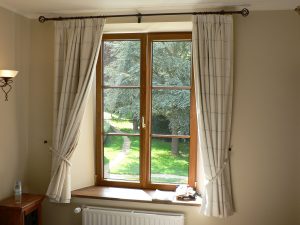 Perhaps this will get your attention: casement windows(as shown on the right), on average, cost twice as much as double-hung. If you’re redoing a house, you’ll likely need around twenty windows, and that can add up fast. Because of the way they operate, casement windows do not work with window-mounted air-conditioning units.
The average of casement windows, however, is that they tend to seal better when closed, they don’t move around much when open, and when you look out of them you are looking though a single, unbroken pane of glass. At the same time, f you like the way it looks, you can order casement window broken into panes.
Meanwhile, double hung windows are great for most houses—they work well and look lovely, and the price is right. There are also real advantages to double-hung windows. They open up and down, so they don’t take up any space when open.
Trick of the trade: Please remember that you cannot crack open a casement window. When you open it, you are opening it on three sides of the sash. If you live in a cold place and like to have your windows open just a smidge to get in air but keep the cold out, consider double-hung windows.
Some window-purchasing tips
When ordering your windows, think about ordering screens and window safety guards at the same time. They don’t come with the window, but they’ll work better if they’re made by the same company as the windows themselves. Also, take into account the window treatment—meaning the blinds, shades, curtains, and the like—that you are intended to use, and make sure the kind of window you order is compatible with the window treatment you want.
For example, if you want to use blinds inside your house, don’t order a casement window that opens inward—that just won’t work. If you have exterior shutters, you’ll have the same problem with a window that opens outward.

How to fix a window that’s stuck
This issue likely to come up in a house with wooden windows that you are just moving into or in a room that hasn’t been used for a long time. Sometimes, windows just stick. The usual culprit here is old paint that has sealed the sash to the frame or built up to the point where the sash sticks.
If this happened, do not under any circumstances try to force it open either by applying lots of pressure or by banding the window around. Why? There’s glass in them there panes, and you don’t want to break it, because that would mean replacing the entire window.
Before going any further, make sure the window is unlocked. If it isn’t unlocked, you have a real problem. Take a hammer and a small block of wood. Hold the wood up to the window and lightly tap around the window sash and frame, using the wood to protect the window from hammer damage. That might loosen the sash. You can also take a utility or spackle knife and score the perimeter of the window where the sash meets the frame.
If that doesn’t work, check to see if there is paint between the sash and the frame. If there is, you can try running a utility knife or a pizza cutter between the sash and the frame to break the seal. If you have a mental-frame double-hung window that’s sticking, try removing the sashes from the frame and adding some lubricant to the channels. If you have a wooden window, you may need to remove the stop and take the sash out and lubricate. If all of that fails, you may need professional help.
The Ins and Outs of Cleaning Gutters
Preventing Ice Dams in your Gutters
We’ve said it before, but it bears repeating: please make sure your roof is properly ventilated and insulated. This is the best thing you can do to prevent ice dams. But even a perfect roof may form ice dams, especially in places that get really cold during the winter and where debris falls into the gutters.
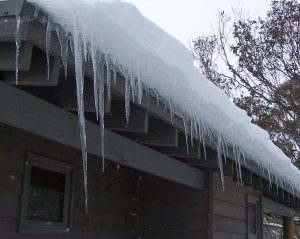
Another layer of defense against this problem is something called heating tape. Heating tape is an insulated wire that runs along your gutters and when plugged in, it will heat up and prevent too much ice and snow from forming.
Heating tape is made by various manufacturers, but generally it is designed to turn on when the temperature falls below a certain point. The tape is insulated in loops that run the entire length of your gutter and up along the overhang of your roof.
Installation instructions are different for each brand, so follow them, but essentially you’ll be stapling the tape along the roof and running the cord down to an electrical outlet. Heating tap usually works best when it is replaced every season.
Keeping your gutters clean without doing it yourself
You can pay a company to clean them foe you. That really isn’t a bad idea, especially since gutter cleaning involves ladders, and we’re already been through how dangerous they can be. Consider entering into cleaning and maintenance contract with the company that installed your gutter, which can be a big help if the gutters being to break over time.
The other thing to do is have a contractor install a gutter cover. There come in a variety of styles , but essentially it’s a grated lid that goes over the gutters, allowing water to flow easily into the gutter but preventing leaves, animals, branches, and other bits and pieces from falling in there as well.
Gutter cover are a great thing—a must, really if you live on a property that’s full of tress—but they are not a cure-all. Even a property covered gutter will still need to be cleaned every year. The cleaning, however, should be much easier that if you had not installed the covers at all.
How and when should I clean my gutters?
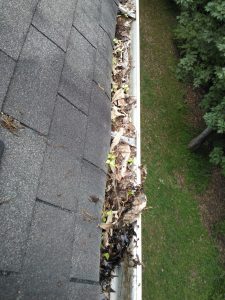 Obviously, you should clean you gutters. This ought to be done twice a year, in spring and in autumn. The right ladder for this job, if you have one high enough, is a good A-frame, because a leaning ladder might do some damage to certain kinds of gutters. Wear safety gloved, as there may be all sorts of sharp bits and pieces in the gutters.
Working your way around the gutter, use a trowel or other tool to scope out the gutter, and carry a solid garbage bag to dispose of what you find. Then bring a garden hose up and inundate the gutters with water. At the bottom of the gutter system, around the foundation of your house, you’ll find a few drainpipes, which drain the gutter out into your garden and way from your house.
These also need to be cleaned out now and then, and the best tool for the is is a plumber’s auger, or snake, which is a long tightly wound metal cable with a crank at the end. Essentially, you crank it up into the drain and then pull it out, pulling whatever was up there with it.
Trick of the trade: cleaning gutters is a surprisingly messy job, so wear old clothes and be prepared for some ugly streaky dirt stains on your exterior walls until the next rain.
The Basics of Windows
How to Speak Window
Windows have their own involved terminology, which you have understand before we can go any further. The frame of the window is the window’s perimeter, and it holds the window together. The sash is the smaller piece that holds the glass inside it and sits inside the window frame itself.
Most windows have two sashes. Some windows have one sash, and a very few windows may have more than two sashes. The pane is the piece of glass inside the sash. Most sashes today are double-paned meaning the frame of the sash supports two panes that are attached to each other for greater insulation.
Until recently the most common window in the United States was a wood framed, single-paned, double-hung window that operated on a simple weighted system. That means the windows had two sashes in them. One above the outer, operating on a simple weighted pulley, and each sash contain a single layer of glass.
Telling one kind of window from another
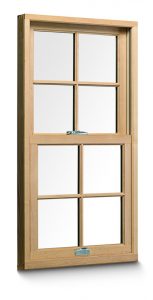 Double-hung windows have two sashes, one above the other as shown on the left. The sashes are installed so that they work on two sets of parallel tracks one set of tracks in front of the outer. Each sash moves up and the other al the way down, the top of the lower sash and the bottom of the upper sash meet and lock and seal, and the window is fully closed.
Double-hung windows are typically the least expense variety of window, even when they are beautiful and well made. If your windows aren’t double-hung, they are most likely casement windows.
A casement window usually has a single sash that opens outward, like the cover of a book, with a crank controlling the pane. You will occasionally run into variants of the casement window where the pane tilts forward or pivots on a central axis, and some casements windows will have multiple planes.
What other kinds of window are there?
Some less typical window types include:
Awning windows: a variant of casement window with a sash that is hinged at the top and swings outward.
Hopper windows: are hinged at the bottom and swing inward.
Sliding windows: like double-hung windows, except the two panes slide horizontally across each other, rather than up and down.
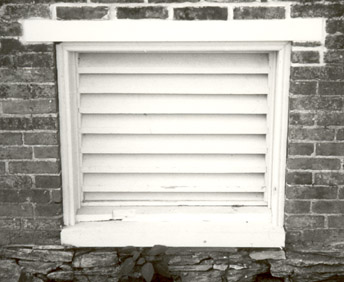
Jalousie windows: very useful in hot rainy places. They have multiple rows of narrow, horizontal glass panes that open and close like a Venetian blind on a crank as shown below.
What are windows made of?
The standard-issue window today is made of hollow aluminum. It’s durable. It’s easy to insulate. It looks good and is without doubt one of the least expensive materials out here.
Even cheaper than aluminum is vinyl. Which does the job beautifully as well but may not be the look every homeowner wants. Homeowners who want a more upscale or traditional look or a landmarked house that require it, will use wooden windows. Wooden windows are more expensive, heavier, harder to maintain, and typically custom made, but they look great, and some homeowners just have to have them.
The decision is up the you, but to be honest with yourself. Even if you can afford them and can pay other people to keep them in working order, are you really interested in having to think about your wooden windows each year? If not, go with aluminum.
Special thanks to Stephen Fanuka & Edward Lewine for their help with these tips.
Upkeep of Roofs
Why do I need proper roof ventilation?
Trust us, roof ventilation is a huge issue and one that is often overlooked by home owners. One of the biggest factors in the health and longevity of you roof is whether it is properly ventilated.
Proper ventilation will reduce temperatures extremes and moisture in your 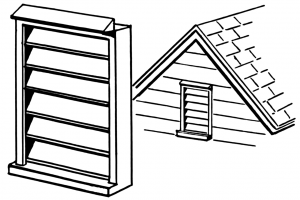 attic, and this In turn will prevent a variety of ills, including condensation in the attic that will rust nails, screws, and metal roofing; frost forming inside the attic and causing wood or rot; and ice forming on the outside of he roof and driving up under the shingles, where it melt and causes leaks, mold, and mildew. Just as important, a properly ventilated roof can cool your house by many degrees all summer long and reduce your energy bills.
There are all sorts of roof vents, but a good system will have:
- Intake vents, which are situated at the bottom of the roof, often under the eaves, and which allow air to flow into the attic.
- Exhaust vents, which sit at the tap of the roof and allow air to flow out.
If you’re not sure how well your roof is ventilated, ask a roofing contractor to come in and do an inspection. If he thinking you need more ventilation, consider hiring someone to do this. It is theoretically possible for a homeowner to install roof venting, but the job is complex, because it requires knowledge of just hoe much venting you need.
Trick of the trade: Remember that you can actually have too much venting. An overvented roof will function just as a poorly as an undervented one. Having too much ventilation can reduce the proper exchange of air that venting relies on and can bring too much either inside your roof.
Roofs: The Dark Side
Every once in a while, perhaps twice a year, you should take a few minutes to eyeball your roof from the street. Use a pair of binoculars. If you see a shingle or two loose or missing, you’ll need to make repairs.
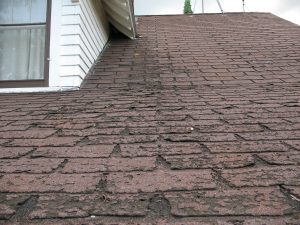 However, the most common way people realize there’s something funky happening on their roof is the appearance of water. You’ll see water in the attic, or water stains on your walls or on the ceiling. Chances are this water has come from somewhere on your roof, although there could be other culprits, lake window frames.
If you do find water or the evidence of it, don’t assume the problem stems from directly above the spot. Hen water leaks in , it will flow with gravity down the path of least resistance. That means a leak can occur on your roof on the lower floor in the front of our house.
So to avoid that diagnosis problem here’s a bit of advice. Every few months, on a day when you have a good, strong downpour, take a trip p to the attic and just scan it for water staining or dripping. You may end up finding a small problem, but if you don’t nip, it can turn into a big problem fast. Either way, if you see some loose or missing shingles. Or some water in the attic, you’ll have to make a roof repair.
Special thanks to Stephen Fanuka & Edward Lewine for their help with these tips.


We treat you right
We work hard to take care of you by doing the job the best way for you and our main goal, which is to add function, usefulness and beauty to your home.
All About Hammers
Stay away from a hammer that’s too small or too large. The little ones make you work too hard, and the big one are impossible to deal with. Pick up a few hammers and chose one hat makes you feel comfortable. The standard hammer head is 4.5 inches from front to claw. The standard hammer length, including the head, is 1 foot. Handles come in wood and metal. Choose whatever feels best for you, but make sure the handle is solid. Hollow handles tend to break.
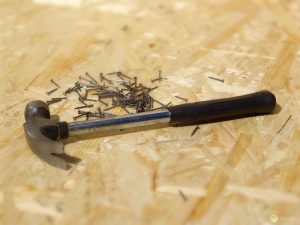 Also make sure the hammer head is attached tightly to the handle. A flying hammer head is a dangerous thing. There are various kinds of hammers for different jobs. For our tool kit you’ll want a curved claw hammer, meaning the two prongs in the back of the hammer’s head are curved for removing nails.
How to hammer a nail
Use a pencil to lightly mark the spot where you want the nail to go. Before anything else, do your best to make sure you are driving the nail into a material that will accommodate a nail of its type or any nail at all. This is particularly important when you are hammering something into a wall.
There may be a thin layer of Sheetrock that the nail won’t hold in, or a brick wall behind the plaster that the nail will bounce out of. A nail should be held between the thumb and the index finger at a 90-degree angle to the surface you are working with. If you’re right-handed, hammer with the right. Left-handed, go with that.
If you swing both ways, as they say, choose the hand that is most comfortable for the job. Keep your wrist firm, and drive the hammer with your forearm. Hold the nail against the desired spot and tap the nail head lightly with the hammer, making sure you drive the nail perpendicular to the material you are nailing into.
When you feel comfortable that the nail has gone in straight and true, tap more firmly until you’ve driven the nail in. Don’t swing the hammer with too much force. Instead, concentrate on hitting the nail firmly and driving tit straight down into whatever you are nailing. Be especially careful to have a light hand when you get to the end of the job, just before the nail disappears into the wood.. If you bang too heavily at this stage, then you will damage the surface you are working with.
Trick of the trade: There are two techniques you might consider when hammering in a nail. First, hold the nail with a pair of pliers instead of with  your hand for greater control and confidence. Second, lay an index card down on the surface and push the nail through that first, as a way of stabilizing the nail and preventing surface damage.
What do I do about a nail that’s gone off-kilter?
Okay, here’s he scoop: even the most skilled woodworker is going to end up with some crooked nails. The best way to prevent this is to concentrate on hammering the nail in perpendicular to the wood. One way you can do that is by making sure you’ve used the proper grip on the hammer, as described up above, and if you are hammering a nail downward, that you are keeping the handle of the hammer pointed at your hips as you work.
But you’ll make mistakes. It happens, and when it does, start over. The worst thins you can do is try to toggle the nail around in the hole, hoping that this will straighten it out. It won’t. Remember, when you hammered in that nail, you create a channel in the wood, and if that channel is on an angle, there is nothing you can do to make it right. All you will get for your effort is a big, misshapen nail hole in eh wood. Yank that nail out with the claw of your hammer and start over.
Special thanks to Stephen Fanuka & Edward Lewine for their help with these tips.
Interior Work
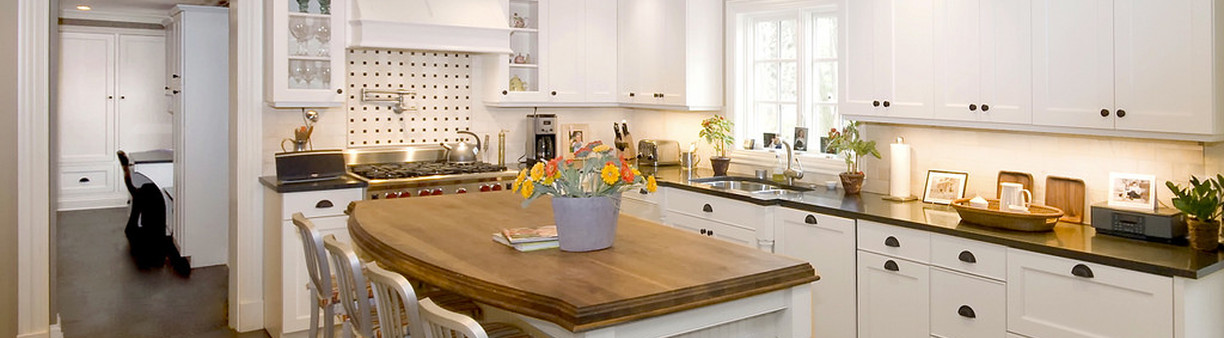
When working on the inside of your home, we work on bathrooms, kitchens, recreation rooms, and any other minor repairs involved in your home.
Exterior Work
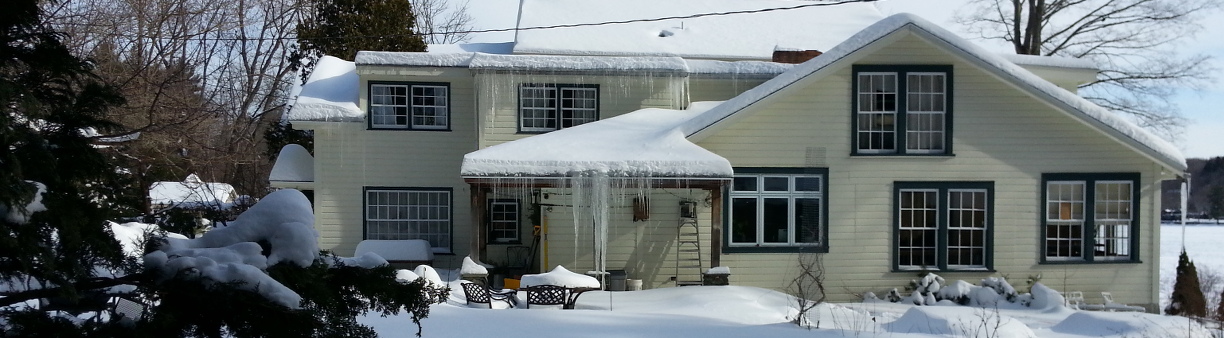
When working on the outside of your house, we work on roofing, siding, windows, doors, and decks. We also provide snow removal.